
“Planning everything doesn’t help anyway. It all keeps changing.” I hear this objection a lot. My experience is exactly the opposite: because so much changes, I need to know what’s already on my plate.
Every commitment needs a next step
That’s why, in easydoo, every commitment I’m responsible for has at least one next step. It doesn’t have to be big. Sometimes it’s simply: “In four days, I’ll take ten minutes to think about how to move forward.”
Without such a step, a commitment isn’t really planned. It might sit on some list, but there it disappears among a hundred other entries. easydoo automatically shows me which commitments still have no next step. I know the underlying principle from Getting Things Done too: what matters is knowing what to do next.
When the plan changes
Of course, my plan won’t play out exactly as expected. A customer needs an answer sooner, a meeting runs longer, an urgent task gets added. Then I have to replan. But how am I supposed to judge the impact of a delay if I don’t have a complete picture of my work in the first place?
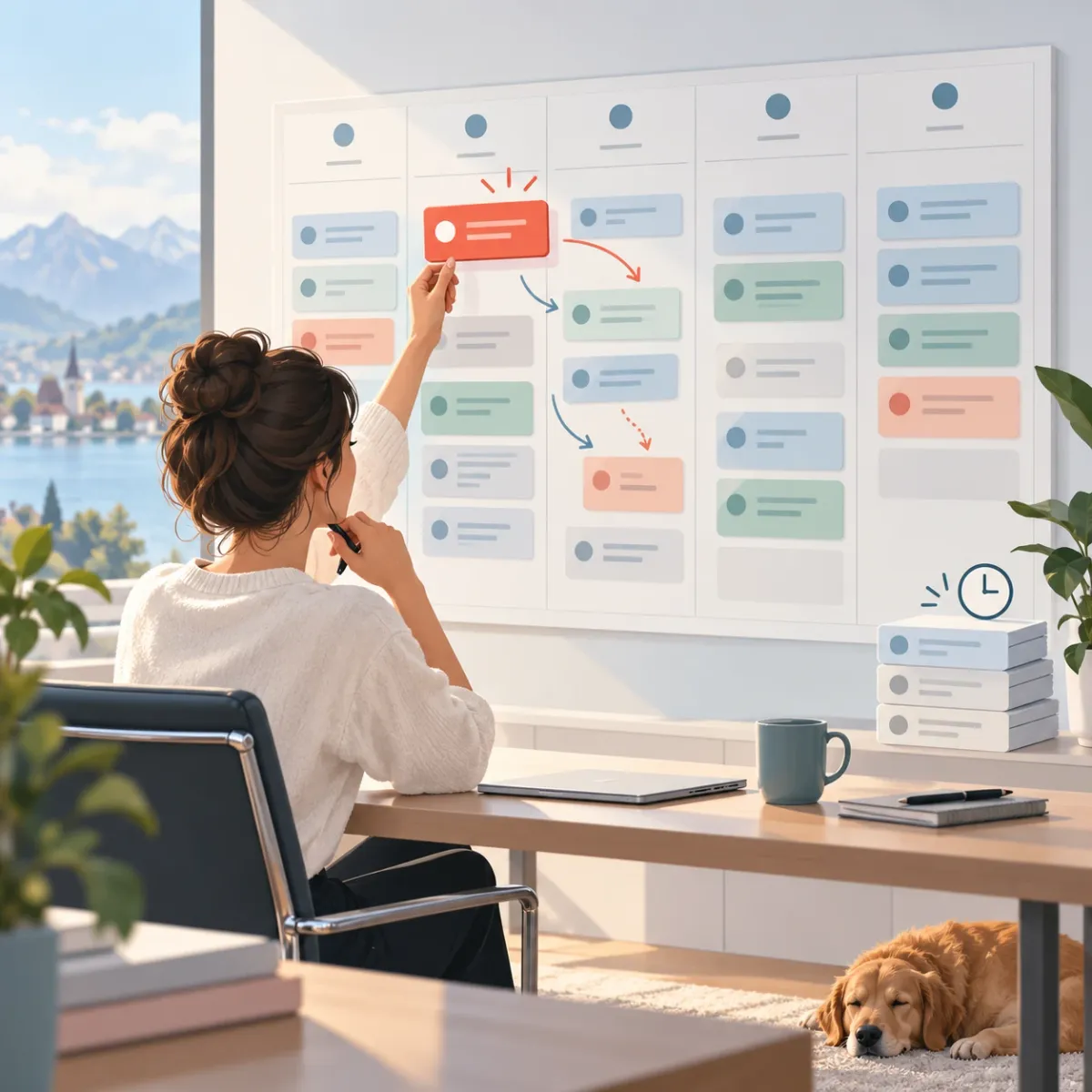
In the easydoo calendar, I can see what work is already scheduled. When something new comes up, or I move a task, I immediately see where things get tight and which commitments are affected. Only then can I consciously decide what takes priority, what can wait, and who I need to inform in time.
A hundred reminders, one appointment
And what about the hundred reminders where I’m just waiting for a reply from someone else?
For that, I don’t need a hundred separate calendar entries. In easydoo, I can bundle these tasks into a collection. For example, I reserve one hour a week to go through them. That hour is on the calendar. With one click, I see all the relevant tasks: where has a reply come in? Where do I need to follow up? Where is another step needed from me?
Planning means overview, not rigidity
For me, planning doesn’t mean rigidly fixing every working day. Planning means that no commitment falls out of sight, and that I can see the consequences whenever something changes.
A plan is allowed to change. The overview shouldn’t get lost along the way.