
With AI, almost anyone can quickly build an application today. But a working app is still a long way from a professional software product.
The challenge begins afterwards
Who takes care of security, user management, permissions, data storage, backups, updates and day-to-day operation?
And when AI agents take on tasks: who controls their access to information and their actions? AI must not be a black box once it becomes part of business-critical processes.
An example: foundation fundraising
Take a fundraising solution for foundations as an example. An organisation wants to manage potential funding foundations, identify suitable funding opportunities, prepare applications and steer the entire process through to approval and reporting.
With AI, this specialised solution could be built more easily. But nobody wants to develop a complete software platform just for that.
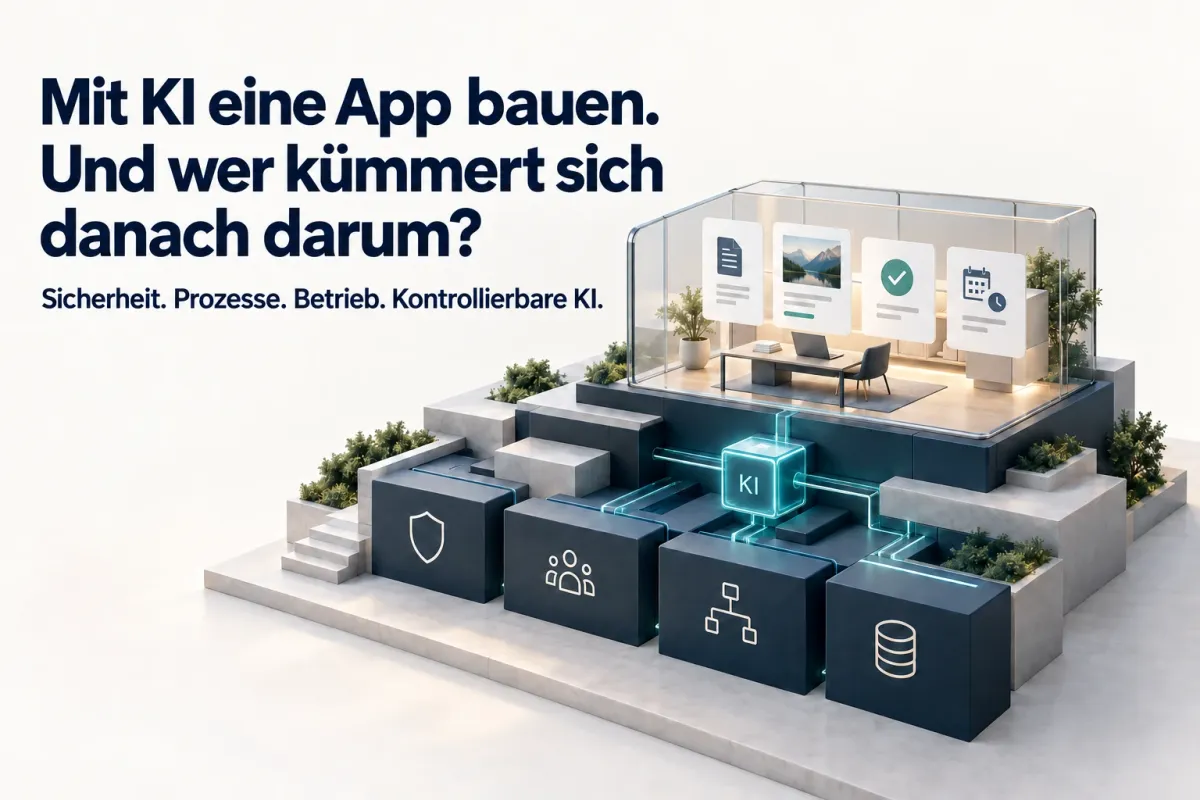
It would make far more sense to have an existing foundation on which individual specialised solutions and business processes can be built with AI. A platform that already comes with user management, permissions, document management, communication, tasks, deadlines and process management.
AI could help set up data structures, forms, relationships and workflows.
AI in operation, too – under clear rules
AI should also support day-to-day operation. For example: researching suitable foundations, matching funding criteria against projects, preparing draft applications, analysing documents or automating recurring tasks.
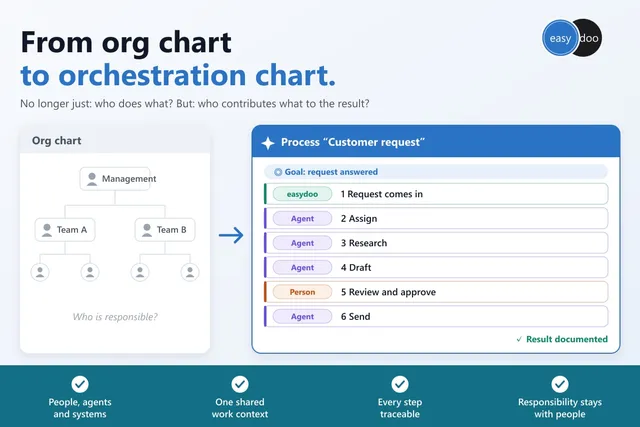
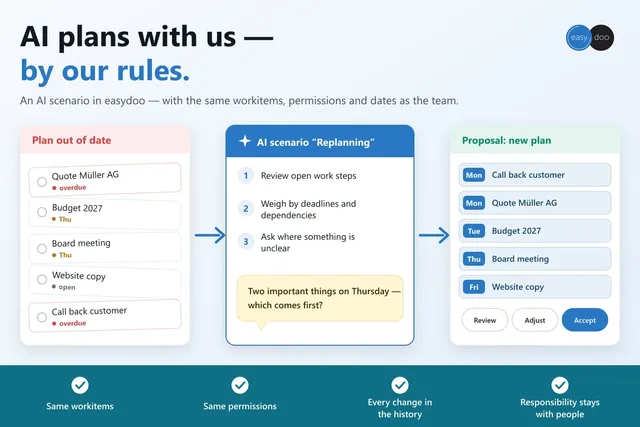
But under clearly defined rules. Every AI bot would have to be integrated into the work organisation like an employee: with its own identity, defined permissions, specific tasks and traceable actions.
What is it allowed to read? What is it allowed to change? When does it need human approval?
All of this would have to be part of a shared security concept – rather than being developed again from scratch for every application.
What happens to the finished solution?
One organisation wants to use it internally. An industry expert turns it into a product for many customers. Both should be possible without having to run a separate technical infrastructure for each customer.
The future of individual specialised solutions
That is where I see the future of individual specialised solutions. AI reduces the development effort. A shared platform reduces technical complexity and operating effort. And an integrated security concept makes the use of AI agents controllable, too.
And that is exactly what we are building easydoo for: a professional, secure and continuously evolving platform on which individual specialised solutions and processes can be created with AI – for your own operations or as a reusable software product.
With AI, almost anyone can build an app today. With AI and easydoo, it can become a professional software product – without having to develop and operate the technical platform yourself.