
My goal: by the end of the day, my email inbox is empty.
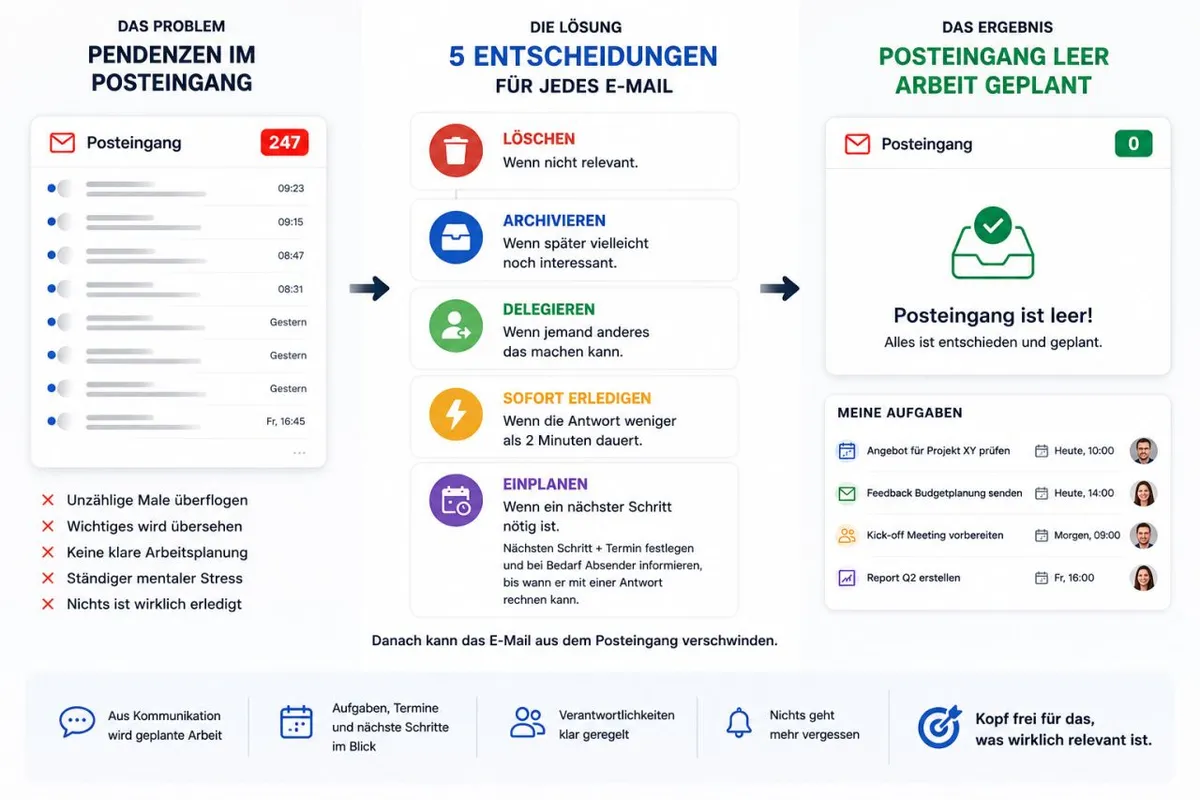
Not because all the work is done. But because a decision has been made for every email about what happens to it.
The problem with tracking to-dos in the inbox
Many people organise their to-dos directly in the inbox. The problem: the same emails get skimmed over and over again. What was important? Where do I still owe a reply? What did I want to get done?
The inbox keeps growing, important things sink to the bottom — and in your head there’s a constant nagging feeling: wasn’t there still something?
Five decisions per email
All it really takes is one consistent decision for every email:
- Delete it, if it isn’t relevant.
- Archive it, if it might still be interesting later.
- Delegate it, if someone else is responsible.
- Do it right away, if the reply takes less than two minutes.
- Schedule it, if it turns into a task.
For me, scheduling also means defining the next step and a date — and, if needed, briefly letting the sender know by when they can expect a reply.
After that, the email can disappear from the inbox.
Organised, not necessarily done
The work isn’t done yet, of course. But it’s organised. I know what I need to do and when. Nothing gets forgotten. And I don’t have to skim the same 50, 100 or 200 emails again every day.
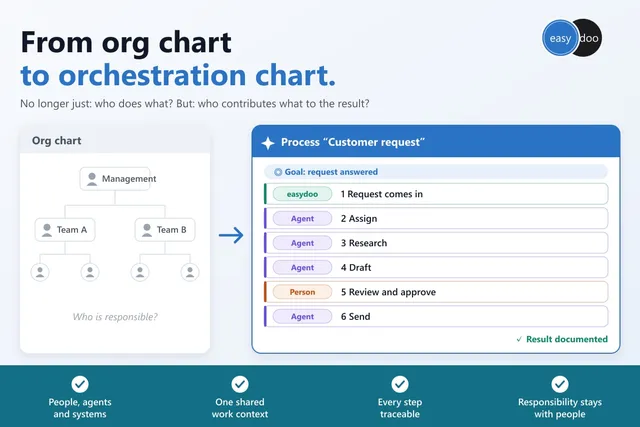
This is exactly the principle easydoo supports throughout: communication becomes planned work. Tasks, appointments, responsibilities and next steps live where they belong.
Empty inbox. Clear head. Work planned. And the attention you’ve gained stays available for what’s actually relevant.